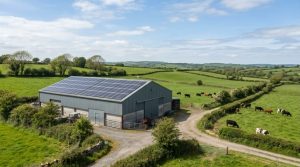
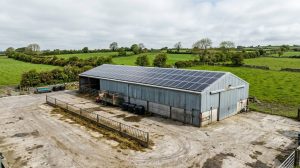
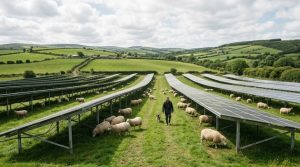
The TAMS 3 solar grant gives Irish farmers up to 60% back on the cost of on-farm solar PV in 2026, with a grant ceiling of €90,000 per holding. It falls under the Solar Capital Investment Scheme within TAMS 3, run by the Department of Agriculture, Food and the Marine.
The headline rate is 60% of eligible costs for most farmers, and that is higher than the standard 40% rate across other TAMS measures. The grant covers panels, inverters, battery storage and the balance of system, up to a reference cost ceiling set by the Department.
One rule trips farmers up every year. You cannot stack the TAMS solar grant with the SEAI commercial solar grant on the same system, so you pick the route that pays more for your farm. Here’s what you can claim, who qualifies, and how the application actually works.
How Much Is the TAMS 3 Solar Grant Worth in 2026?
The TAMS 3 solar grant is worth 60% of eligible investment costs for most applicants, capped at a maximum grant of €90,000 per holding over the lifetime of the scheme. That cap sits inside the separate solar investment ceiling, which is ring-fenced from your other TAMS allocations.
The scheme uses reference costs. The Department sets a standard cost for each item, and your 60% is calculated against that figure, not whatever your installer quotes. If your quote comes in higher than the reference cost, you carry the difference yourself.
- Grant rate of 60% for most farmers on eligible solar items.
- Maximum grant of €90,000, ring-fenced from your general TAMS ceiling.
- Covers solar panels, inverters, battery storage and associated electrical works.
- Calculated against Department reference costs, not your supplier’s price.
Always confirm the current rates and reference costs on the official Department of Agriculture scheme pages before you budget, because reference costs are reviewed and can shift between tranches.

Who Qualifies for the TAMS 3 Farm Solar Grant?
You qualify for the TAMS 3 solar grant if you are an active farmer with a valid herd number, hold at least 5 hectares of owned or leased land, and have submitted a Basic Income Support for Sustainability (BISS) application in the relevant year. Young farmers and registered farm partnerships can access enhanced treatment under the wider scheme.
The solar you install must serve the farm’s own electricity demand. The scheme is designed for self-consumption, so the system is sized to your on-farm load rather than to export power to the grid for profit.
Core Eligibility Conditions
You must meet the baseline farmer and land requirements before any solar-specific rules apply. The main conditions are straightforward.
- Active farmer status with a valid herd or flock number.
- Minimum of 5 hectares of eligible agricultural land.
- A current year BISS application on file with the Department.
- Tax clearance and compliance with cross-compliance standards.
What the Grant Does Not Cover
The grant will not fund oversized systems built for export, second-hand equipment, or work started before approval. Buying panels or paying a deposit before you receive your approval letter disqualifies the spend.
- Systems sized well beyond your farm’s own demand.
- Used or reconditioned panels, inverters or batteries.
- Any works commenced before you get written approval.
TAMS 3 Solar Grant vs SEAI Commercial Solar Grant
You can claim TAMS 3 or the SEAI commercial solar grant on a given system, but never both on the same installation. TAMS suits most working farms because it refunds a percentage of the full cost, while the SEAI scheme pays a fixed rate per kWp. The right choice depends on your system size and farm status.
For smaller farm systems, the 60% TAMS rate usually wins. For larger commercial-scale arrays, the SEAI National Domestic and Microgeneration pathway can suit non-farming parts of a business or diversified operations. The comparison below sets out the headline differences.
| Feature | TAMS 3 Solar | SEAI Commercial (NDMG) |
|---|---|---|
| Grant basis | 60% of eligible cost | Fixed rate per kWp |
| Maximum grant | €90,000 | Up to €162,600 |
| Who it suits | Active farmers | Businesses and larger sites |
| Administered by | DAFM | SEAI |
| Combinable | Not with NDMG | Not with TAMS |
If your holding is a mixed operation, it’s worth running both routes past your installer. A qualified team can model each option against your actual load and roof, and the commercial solar grant guidance explains how the SEAI path works for businesses that fall outside the farm scheme.
How to Apply for the TAMS 3 Solar Grant
You apply for the TAMS 3 solar grant online through the Department’s agfood.ie portal during an open tranche, and the golden rule is to wait for written approval before spending a cent. Applications are assessed and ranked, and only approved applicants can draw down the grant.
The process runs in clear stages. Each tranche has a closing date, so missing it means waiting for the next window.
- Get a site assessment and a system design sized to your farm’s demand.
- Gather your herd number, BISS details and tax clearance.
- Submit the application on agfood.ie before the tranche deadline.
- Wait for your written approval letter from the Department.
- Install the system within the allowed timeframe once approved.
- Submit the payment claim with invoices and proof of payment.
An engineering-led installer who handles the grant paperwork end to end takes a lot of the pressure off, especially around reference costs and claim documentation. For general scheme rules and deadlines, the official guidance on sustainability grants and schemes is a useful cross-check.
Is On-Farm Solar Worth It With the TAMS 3 Grant?
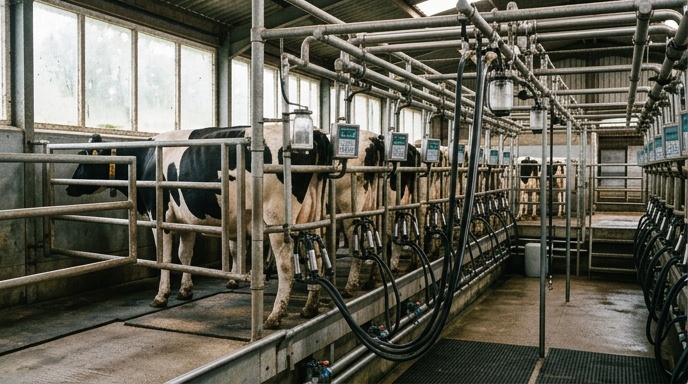
On-farm solar is worth it for most Irish farms because the 60% grant slashes the upfront cost, and farms with heavy daytime electricity use get a fast payback. Dairy parlours, grain dryers, irrigation and cold storage all draw power during daylight hours, which matches when solar generates.
Payback depends on your usage, roof and system size, so treat any figure as a typical range rather than a promise. With business electricity running around €0.23 per unit and the grant covering most of the capital, many farms see payback inside a handful of years.
- Lower overheads on energy-intensive operations like milking and refrigeration.
- Protection against rising and volatile commercial electricity prices.
- Battery storage to shift generation into evening milking or dryer runs.
- A 25-year maintenance contract keeps output and return protected long-term.
Agricultural solar also pairs well with other on-farm work, and we’ve seen the strongest results where panels are sized tightly to real demand. If you want the numbers run against your own farm, the team covers the full farm solar process from assessment to commissioning.
Key Deadlines and Common Mistakes to Avoid
The single biggest mistake is spending before approval, which disqualifies the entire claim. TAMS 3 runs in tranches with fixed closing dates, and approval is competitive, so plan your application well ahead of the deadline rather than at the last minute.
A few avoidable errors cost farmers their grants every tranche.
- Starting works or paying deposits before the approval letter arrives.
- Oversizing the system beyond your farm’s genuine demand.
- Missing the tranche closing date on agfood.ie.
- Incomplete payment claims with missing invoices or proof of payment.
- Assuming you can stack TAMS with the SEAI grant on one system.
Getting the design and paperwork right first time is the difference between a smooth draw-down and a rejected claim. A specialist who does this across Ireland knows where the pitfalls sit.
Claim Your Farm Solar Grant the Right Way
The TAMS 3 solar grant is one of the strongest incentives available to Irish farmers in 2026, but the rules on approval timing, reference costs and grant stacking leave no room for guesswork. Get the design and application right and the return can be excellent.
To find out exactly what your farm can claim and how much solar makes sense for your load, schedule a free consultation and site survey and we’ll handle the grant process from assessment to draw-down.