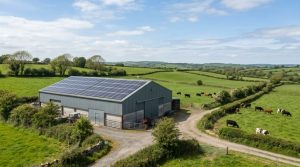
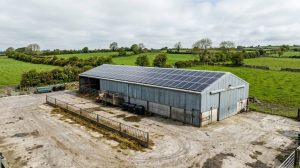
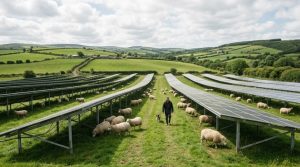
Commercial solar has quietly become mainstream in Ireland, with businesses of every size fitting panels to offset the highest electricity prices in years. Commercial solar panels cost in Ireland are roughly €900 to €1,500 per kWp installed in 2026, so a typical business system runs €40,000 to €120,000 before grants.
This guide breaks down real commercial solar installation pricing for 2026: the cost per kWp, full system totals by size, what moves the price, the grants and tax relief that cut it, and the payback you can expect.
How Much Do Commercial Solar Panels Cost in Ireland?
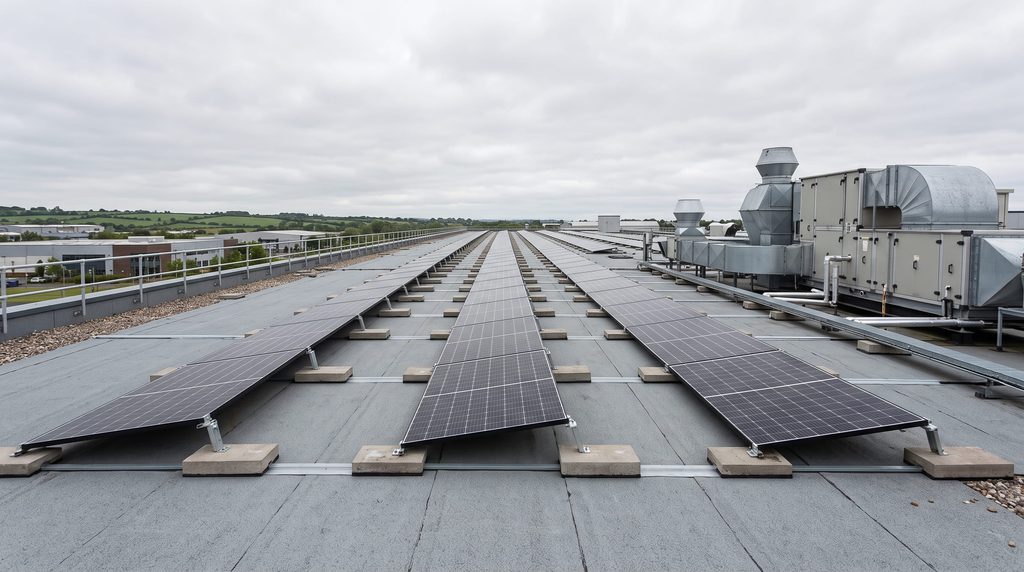
Commercial solar panels in Ireland cost about €900 to €1,500 per kWp installed in 2026, so a mid-size business system commonly lands between €40,000 and €120,000 before grants. Final pricing depends on roof type, equipment quality, and grid works.
Here is what businesses typically pay by system size before any grant is applied.
| System size | Roof space needed | Indicative cost before grants |
| 20 kWp | around 90 m² | €20,000 to €30,000 |
| 50 kWp | around 225 m² | €40,000 to €55,000 |
| 100 kWp | around 450 m² | €90,000 to €120,000 |
| 250 kWp | around 1,100 m² | €200,000 to €300,000 |
These are supply-and-fit ranges for a standard rooftop install. A 50kW solar system cost sits at the smaller-commercial end, while a 100kW solar cost in Ireland benefits from a lower rate per kWp.
What Drives the Price per kWp
Two identical-sized systems can be quoted thousands apart. Beyond system size, the commercial solar cost per kWp moves with roof type, mounting method, inverter quality, cabling distance, and the grid connection.
The main factors that shift a commercial quote are:
- Roof versus ground mount. Rooftop is cheapest. Ground-mount and carport structures add civil works and framing.
- Structural condition. An older roof may need reinforcement before panels go on, which adds cost.
- Inverter and panel grade. Premium bifacial glass-on-glass panels with higher fire ratings suit regulated sites such as pharma, healthcare, and data centres, and sit above budget panels on price.
- Grid connection. Export capacity and any ESB Networks upgrade can be a significant line item on larger systems.
- Cable runs and switchgear. Long distances from roof to plant room raise the material and labour cost.
Large flat roofs are the sweet spot for value, which is why solar for warehouse and factory roofs deliver the lowest cost per kWp of any commercial site. The more panels you fit in one clean install, the cheaper each unit of capacity becomes.
Cost by Business Type and System Size
System size follows your daytime electricity demand, not your roof area, so cost varies widely by sector. A small retail unit or workshop might need 20 kWp, while a warehouse, factory, or cold store often runs 100 kWp or more.
| Business type | Typical system size | Indicative cost before grants |
| Small shop or workshop | 10 to 30 kWp | €12,000 to €40,000 |
| Farm or agricultural shed | 30 to 50 kWp | €30,000 to €55,000 |
| Sports or community centre | 20 to 40 kWp | €20,000 to €50,000 |
| Warehouse or distribution centre | 100 to 300 kWp | €90,000 to €300,000 |
| Factory or manufacturing plant | 150 kWp and up | €130,000 and up |
For sized examples with genuine numbers, our completed sports centre installation in Kildare runs a 23.75 kWp array, while a Dublin school operates a 31.54 kWp system. High-consumption sites scale far beyond that, with large distribution centres often carrying well over 100 kWp to match a full working day of load.
Grants and Tax Relief That Cut the Cost
The main support is the SEAI Non-Domestic Microgen Grant, worth up to €162,600 for solar PV systems from 1 kWp to 1,000 kWp. On top of the grant, trading businesses can write off qualifying equipment against tax, which pulls the effective cost down further.
You can usually stack more than one support, and a good installer applies for whichever route pays most. The key options are:
- SEAI Non-Domestic Microgen Grant. Direct funding up to €162,600, tiered by system size. See exactly how the business grant is applied to your system before you commit.
- Accelerated Capital Allowance. Companies and sole traders can write off 100% of qualifying solar equipment against profits in year one instead of over eight years.
- TAMS 3 for farms. Farmers can access up to €90,000 towards solar PV on agricultural buildings as an alternative to the SEAI route.
Full eligibility and current rates sit with the SEAI Non-Domestic Microgen scheme, and you must use an SEAI-registered installer to qualify.
How to Get an Accurate Quote
A firm price only comes from a site survey. A qualified installer will pull at least 12 months of half-hourly consumption data from ESB Networks, review your roof orientation and structural capacity, and model the annual yield for your location. That load profile decides the right system size, which decides the cost and the grant.
Book a free site survey with a qualified, SEAI-registered installer to get a firm figure for your building and confirm exactly which grants your business can claim.