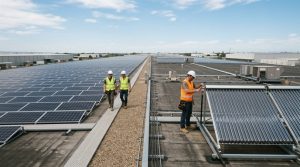
Commercial solar panel maintenance is lighter than most business owners expect, but it isn’t zero. A well-installed commercial system needs scheduled monitoring, periodic cleaning where soiling is heavy, annual inverter and electrical checks, and a visual roof inspection once or twice a year. That’s the core of it.
Panels have no moving parts, so the big jobs sit with the inverter, the wiring, and keeping the glass clear enough to perform. Most of what matters happens through remote monitoring, which flags a drop in output before you ever notice it on a bill.
Below is what a commercial system actually needs, how often, and where the real risks hide on a large roof.
What Does Commercial Solar Panel Maintenance Involve?
Commercial solar panel maintenance involves four recurring jobs: remote performance monitoring, panel cleaning, inverter and electrical inspection, and a structural roof check. Together they keep output near design levels and catch faults early. On a large commercial array, these are planned tasks on a schedule, not reactive call-outs.
The work splits into tasks you barely notice and tasks that need a qualified technician on site.
- Remote monitoring runs constantly and flags underperformance automatically.
- Panel cleaning, depending on your site’s dust, pollen and bird activity.
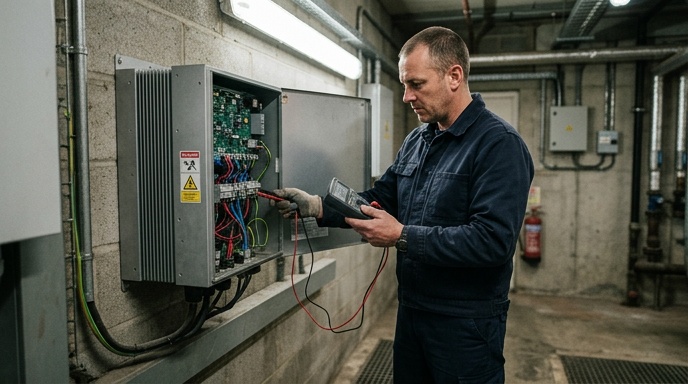
- Inverter inspection, the single most failure-prone component.
- Electrical testing of DC and AC connections, isolators and earthing.
- Visual roof and mounting inspection for corrosion, movement or ponding.
For regulated sites like healthcare or pharma, inspections also confirm fire-rated panel performance and compliance records stay current.
How Often Should Commercial Solar Panels Be Serviced?
Commercial solar panels should have a full technical service once a year, with monitoring reviewed continuously and cleaning carried out as the site demands. A single annual visit covers the electrical and mechanical checks, while the software does the day-to-day watching in the background.
The right frequency depends on your roof, your location and what surrounds the building.
| Task | Typical Frequency | Who Does It |
|---|---|---|
| Performance monitoring | Continuous, reviewed monthly | Monitoring platform and installer |
| Panel cleaning | Once or twice a year | Specialist cleaning team |
| Inverter inspection | Annually | Qualified technician |
| Electrical testing | Annually | Qualified technician |
| Roof and mounting check | Annually | Technician or roofer |
A warehouse beside a quarry or a farm with heavy dust needs cleaning more often than a glass-fronted office. Sites under flight paths or near the coast carry their own wear patterns too.
How Does Monitoring Catch Problems Before They Cost You?
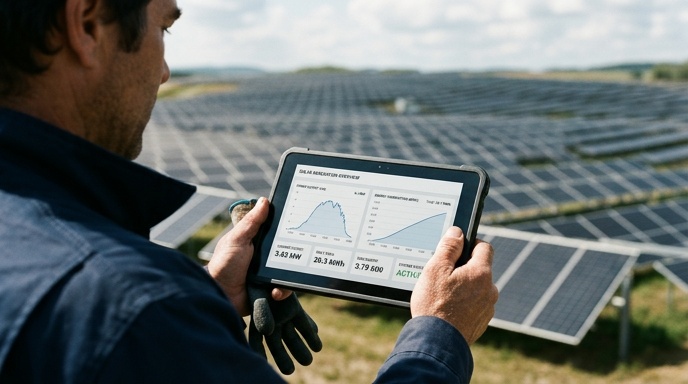
Monitoring catches problems by tracking live output against expected generation, then alerting you when a panel string, inverter or circuit drops below its predicted curve. A fault that would otherwise hide for months shows up the same day as a dip on the dashboard. That early warning is where monitoring pays for itself.
On a large commercial array, a single failed string can quietly shave a percentage off your yield without any visible sign on the roof.
What Can Monitoring Detect?
Monitoring detects anything that changes your generation pattern against the baseline. Common flags include a tripped inverter, a disconnected string, shading from new obstructions, and gradual soiling build-up.
- Inverter faults or shutdowns.
- Individual string or panel underperformance.
- Soiling losses creeping up over weeks.
- Grid or export issues affecting output.
Why Does Early Detection Matter for ROI?
Early detection protects the payback you based your investment on. Every week a fault runs unseen is generation you paid for and didn’t receive, which stretches your payback period. Catching it fast keeps your actual yield close to the modelled figure.
Do Commercial Solar Panels Need Cleaning in Ireland?
Yes, but less than you’d think, because Irish rainfall does a lot of the work. Regular rain rinses most dust and pollen off panels set at a typical roof pitch. Cleaning still matters where soiling is heavy or where panels sit at a shallow angle that lets grime settle rather than run off.
Certain sites genuinely benefit from a scheduled clean. Watch for these conditions.
- Low-pitch or flat arrays where rainwater pools and dries dirty.
- Farms, quarries and food-processing sites with airborne dust.
- Roofs near trees with heavy bird activity and sap.
- Coastal sites with salt deposit.
On a large flat warehouse roof, the difference between a dirty and a clean array can be a measurable yield gain. The commercial case for cleaning follows the numbers, so monitoring tells you when soiling losses justify the visit. For sector-specific demands, our solar for warehouses work shows how large flat roofs are managed in practice.
What Are the Biggest Maintenance Risks on a Commercial Roof?
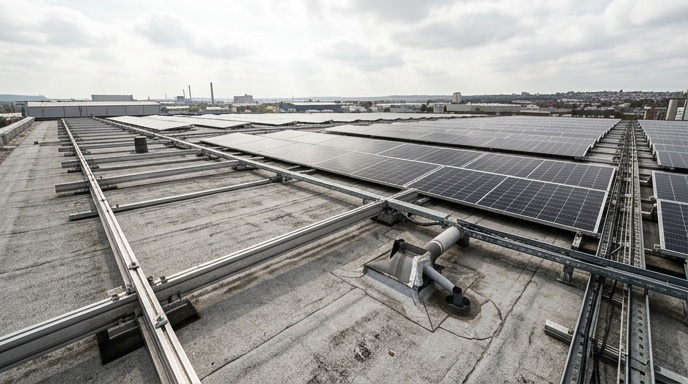
The biggest risks on a commercial roof are inverter failure, water ingress at roof penetrations, mounting corrosion, and electrical connection faults. These cause the most downtime and the most expensive repairs, so a good maintenance plan targets them directly rather than fussing over the panels themselves.
Panels are the most reliable part of the system. The components around them age faster.
- Inverters typically need replacing once during a system’s life, often around the 10 to 15 year mark.
- Roof penetrations can leak if flashing or seals degrade.
- Mounting rails and clamps corrode at coastal or industrial sites.
- DC isolators and connectors loosen or degrade over time.
This is where engineering-led design matters. A system mounted and sealed properly from day one carries far less maintenance risk across its lifetime. For the compliance paperwork and safe-working standards behind rooftop electrical work, the official HSA construction safety guidance sets the baseline Irish installers work to.
Is a Solar Maintenance Contract Worth It for Commercial Systems?
A maintenance contract is worth it for most commercial systems because the cost is small against the value of protected generation and a warranty kept valid. A planned contract bundles monitoring, annual servicing, cleaning and fault response, which usually costs less than reactive repairs and lost output over the same period.
Without a plan, a quiet inverter fault or creeping soiling eats your returns before anyone looks at the roof.
- Monitoring and alerts handled on your behalf.
- Scheduled servicing that keeps manufacturer warranties valid.
- Faster fault response, less downtime.
- Predictable annual cost instead of surprise repair bills.
The contract length is worth checking closely. Some cover a year or two, while a full lifetime arrangement maintains the system across the entire 25-year product guarantee, which is the level of cover that genuinely protects a long-term ROI. The SEAI business energy guidance is a useful reference on keeping commercial systems performing against their design.
Who Should Maintain a Commercial Solar System?
A commercial solar system should be maintained by an SEAI-certified installer with qualified electrical technicians, ideally the team that designed and installed it. They hold the system records, understand its layout, and can service inverters and electrical work safely and to standard.
General handymen or roofing contractors aren’t the right fit for live DC and AC solar work.
- SEAI certification for commercial standards and warranty validity.
- Qualified technicians for safe electrical testing.
- Access to your original design and monitoring data.
- All-Ireland cover if you run sites across the border.
If you’re planning a new system or reviewing an existing one, a free consultation and site survey is the cleanest way to get a maintenance plan matched to your roof and sector.
Keeping Your Commercial System Performing
Commercial solar maintenance comes down to watching output, servicing the inverter and electrics once a year, cleaning when the site needs it, and checking the roof stays sound. Do those well and a well-built array holds close to its design yield for decades.
To get a maintenance plan built around your building and sector, book a free consultation and site survey with our team.