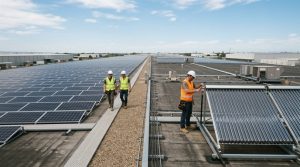
For most Irish businesses, solar PV is the better choice because it generates electricity you can use across your whole operation, while solar thermal only heats water. If your site runs machinery, lighting, refrigeration or EV charging, PV pays back across far more of your bill.
Solar thermal still earns its place where hot water demand is genuinely large and constant, such as hotels, leisure centres or food processing. The honest answer depends on what your building actually consumes.
Here we break down how each technology works, what it costs, which grants apply, and how to decide between solar PV and solar thermal for a commercial site in Ireland.
What Is the Difference Between Solar PV and Solar Thermal?
Solar PV converts sunlight into electricity using photovoltaic panels, while solar thermal captures heat from the sun to warm water or fluid. One produces power for anything electrical on site, the other produces hot water only. That single distinction decides which suits your business.
- Solar PV runs lights, machines, pumps, chillers, EV chargers and anything on the meter.
- Solar thermal feeds hot water tanks, space heating or process heat.
- PV surplus can charge a battery or export to the grid. Thermal surplus simply goes to waste once your tank is full.
In practice, PV is the more flexible technology for a commercial site because electricity touches every part of your operation. Thermal is a specialist tool for a specific heat problem.
How Does Solar PV Work for a Commercial Building?
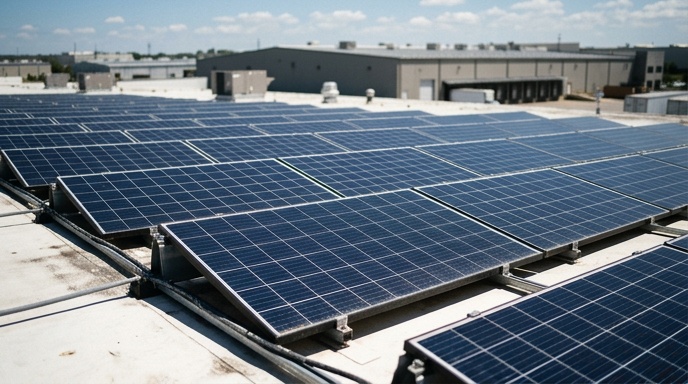
Solar PV works by using panels to turn daylight into direct current, which an inverter converts into usable alternating current for your building. Any power you don’t use on site can charge a battery or export to the grid. It offsets your electricity bill directly, kilowatt for kilowatt.
For commercial roofs, output is measured in kWp (kilowatt-peak). A larger roof means a larger array and more generation during daylight hours when most businesses are busiest.
Where PV Delivers the Most Value
PV delivers the most value on buildings with high daytime electricity use and large unshaded roof space.
- Warehouses and distribution centres with big flat roofs.
- Factories and manufacturing with constant daytime loads.
- Cold storage sites running refrigeration around the clock.
- Sites adding EV charging, where solar feeds the chargers.
The Role of Battery Storage
Battery storage lets you use solar power after dark or during demand peaks, rather than exporting it cheaply. Pairing PV with a battery raises self-consumption and improves payback, especially for sites with evening or shift-based demand. It also supports peak shaving to cut expensive demand charges.
How Does Solar Thermal Work and Who Suits It?
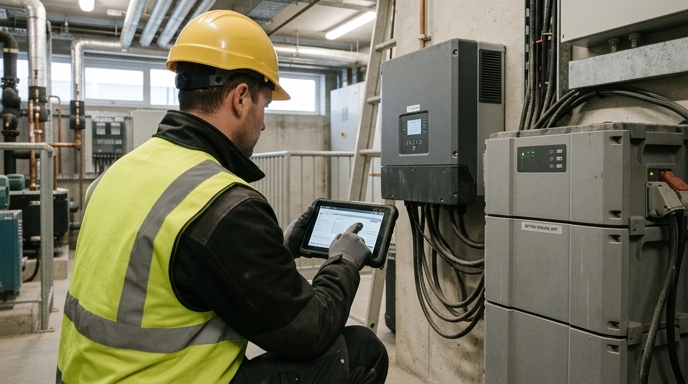
Solar thermal uses roof-mounted collectors to heat a fluid, which transfers heat to your hot water system through a cylinder. It suits businesses with large, steady hot water demand, because its only output is heat. Where that demand exists, it can offset a big chunk of water-heating costs.
Thermal is most efficient at turning sunlight into usable energy, but only for one job. The catch is matching generation to real demand.
- Hotels and guesthouses with high guest hot water use.
- Leisure centres and swimming pools needing constant heat.
- Food processing and commercial kitchens.
- Care facilities with steady hot water loads.
If your hot water need is small or seasonal, much of that heat goes unused. That’s why thermal rarely suits a warehouse or an office, where the real cost sits in electricity, not water heating.
Which Costs Less and Pays Back Faster?
Solar PV usually offers the broader and faster return for commercial sites because it offsets your entire electricity bill, not just water heating. Business electricity in Ireland sits around €0.23 per kWh, so every unit PV generates has clear value. Payback depends on usage, roof and system size, so treat all figures as typical ranges rather than guarantees.
The table below compares the two technologies at a glance.
| Factor | Solar PV | Solar Thermal |
|---|---|---|
| Output | Electricity for whole site | Hot water only |
| Best fit | High daytime power use | High constant hot water use |
| Surplus handling | Battery or grid export | Wasted once tank is full |
| Commercial grant | SEAI NDMG applies | Limited scheme support |
| Scales with EV charging | Yes | No |
For a business weighing capital outlay against savings, PV spreads its return across lighting, equipment and charging. Thermal concentrates its return on one cost line, so it only wins where that line is large.
What Grants Apply to Commercial Solar in Ireland?
The main commercial incentive is the SEAI Non-Domestic Microgeneration Grant (NDMG), which supports solar PV systems and is worth up to €162,600 depending on size. Solar thermal has far narrower commercial grant support, which further tilts the business case towards PV for most sites.
Current NDMG rates work in tiers by system size, so the grant scales with your array.
- 7 to 20 kWp at €300 per kWp.
- 21 to 200 kWp at €200 per kWp.
- 201 to 1,000 kWp at €150 per kWp.
Always confirm current rates against the official SEAI business grants guidance before you budget, as schemes change. You can read more on how the scheme works on our commercial solar grant page, and our team handles the application end to end.
Businesses may also claim the Accelerated Capital Allowance on qualifying energy-efficient equipment, though you should verify current tax treatment with your accountant or Revenue guidance on business reliefs at the time you invest.
Can You Combine Solar PV and Solar Thermal?
Yes, some businesses run both, using PV for general electricity and thermal for a heavy hot water load. In reality this is rare on commercial sites, because PV paired with a battery and a heat pump often covers heating electrically while keeping one flexible system to maintain. Fewer moving parts usually means lower lifetime cost.
Before committing to two systems, weigh these points.
- Roof space is finite, so thermal collectors reduce room for revenue-generating PV.
- Two technologies mean two maintenance regimes.
- A heat pump run on solar electricity can replace the thermal job on many sites.
For most Irish businesses, a well-sized PV array with storage is the simpler, more adaptable investment, and it scales neatly if you later add EV charging. A proper site survey settles the question for your building.
How to Decide Between Solar PV and Solar Thermal
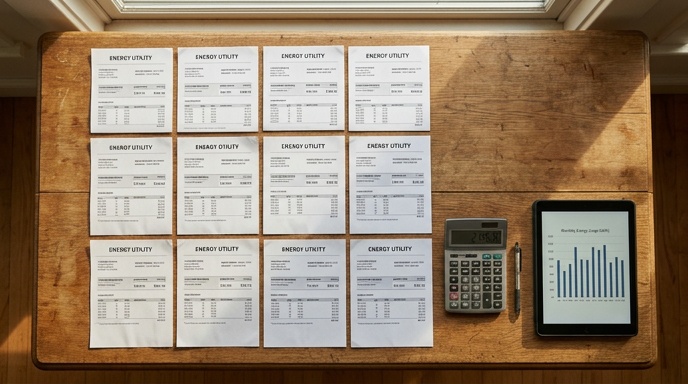
Start by looking at your biggest energy cost. If your bills are driven by electricity for machinery, lighting, refrigeration or charging, solar PV is almost always the right call. If your single largest cost is heating water, and that demand is constant, solar thermal earns a closer look.
- Pull 12 months of energy bills and split electricity from heating.
- Measure usable, unshaded roof space.
- Check whether daytime demand matches daytime generation.
- Factor in future plans like EV charging or expansion.
An engineering-led survey turns these inputs into a sized system and a realistic payback range, grounded in your actual loads rather than rules of thumb.
The right system comes down to what your building consumes and where the cost sits, not to which technology sounds greener. Get the numbers assessed properly and the choice usually makes itself.
To find out which system fits your site and bills, schedule a free consultation and site survey with our team.