Commercial EV charging gives Irish businesses a way to power staff, fleet, and customer vehicles on site, cut running costs, and meet growing demand from drivers. With over 212,000 EVs now on Irish roads and battery models outselling petrol and diesel for the first time in January 2026, charging infrastructure has become a practical business decision rather than a future one.
The right setup depends on who you serve. A logistics depot needs fast, high-power charging that turns vehicles around quickly. A hotel wants slower, guest-friendly points. An apartment block needs shared metering and billing that keeps residents fair.
This guide walks through charger types, costs, grants, and the main use cases so you can plan an install that actually fits your building and your budget.
What Is Commercial EV Charging and How Does It Work?
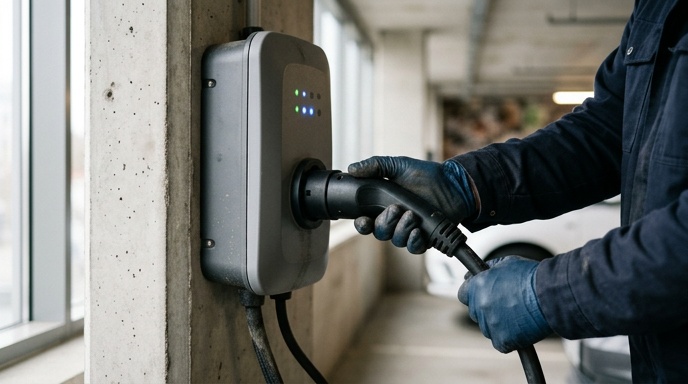
Commercial EV charging is the installation of dedicated charge points at a business premises to power electric vehicles for staff, fleets, customers, or residents. It differs from home charging in scale, power output, load management, and the ability to meter and bill separate users, which matters when several vehicles draw power at once.
Most commercial setups combine three parts working together.
- Charge points, the units drivers plug into, rated by power output in kilowatts.
- Load management software that balances demand so your incoming supply is not overloaded.
- Billing and monitoring, so you can track usage, recover costs, or offer charging as a paid amenity.
The heavier your simultaneous demand, the more the design leans on smart load balancing and, in many cases, a grid connection upgrade. Getting this assessment right at the start avoids expensive rework later.
What Are the Types of Commercial EV Chargers?
Commercial EV chargers fall into two broad categories, AC (alternating current) and DC (direct current), and the split comes down to speed and cost. AC chargers are slower and cheaper, suited to long dwell times. DC rapid chargers deliver a fast top-up in minutes but cost far more to buy and install.
1. AC Charging for Workplaces and Slow Turnarounds
AC charging suits sites where vehicles sit for hours, such as staff car parks, hotels, and apartment blocks. Units typically range from 7kW to 22kW and add roughly 40 to 100 kilometres of range per hour depending on the vehicle and supply.
2. DC Rapid Charging for Fleets and Fast Turnarounds
DC rapid charging suits depots, forecourts, and destinations where vehicles need a quick top-up. Rapid units start around 50kW and run to 150kW or higher, delivering most of a charge in under an hour. They demand a stronger grid connection and a larger upfront spend.
| Feature | AC Charging | DC Rapid Charging |
|---|---|---|
| Typical power | 7kW to 22kW | 50kW to 150kW+ |
| Best for | Workplaces, hotels, apartments | Fleets, depots, forecourts |
| Charge time | Several hours | Under an hour |
| Install cost | Lower | Significantly higher |
Many businesses run a mix. A hotel might install AC points for overnight guests and a single DC unit for quick daytime top-ups. Your commercial EV charging options should match dwell time first, then power.
How Much Does Commercial EV Charging Cost?
Commercial EV charging cost varies widely by charger type, number of points, and whether your site needs a grid connection upgrade. AC units are the most affordable, while DC rapid chargers carry a much higher hardware and installation bill. Site works, cabling runs, and any supply upgrade often move the total more than the chargers themselves.
The main cost drivers to budget for are:
- Charger hardware, driven by AC versus DC and the number of points.
- Civils and cabling, trenching, ducting, and the distance from your distribution board.
- Grid connection, a possible upgrade with ESB Networks if demand exceeds your current capacity.
- Software and billing, ongoing subscription for monitoring and payment.
Because every site is different, exact figures depend on your building, usage, and market pricing at the time. A site survey is the only reliable way to price it. Pairing charging with solar and battery can also cut the electricity cost of every charge, which improves the long-term numbers.

What Grants Are Available for Commercial EV Charging?
Grant support for commercial and apartment EV charging in Ireland is delivered mainly through ZEVI (Zero Emission Vehicles Ireland) and related schemes, with a dedicated apartment charger grant for multi-unit developments. Grant amounts and eligibility change regularly, so confirm the current rate before you commit, as figures date fast.
The main routes worth checking are:
- The apartment EV charger grant, aimed at shared charging in apartments and MDUs.
- ZEVI supports for destination and shared charging, which vary by scheme year.
- The Accelerated Capital Allowance, a 100% first-year tax write-off for eligible energy-efficient equipment.
You can check the current national approach in the government’s Zero Emission Vehicles Ireland information, which sets out the €120m committed under the National EV Charging Strategy 2026 to 2028. Northern Ireland runs separate schemes, so do not apply Republic figures across the border.
Which EV Charging Setup Suits Your Business?
The right EV charging setup depends on your sector, your users, and how long vehicles stay on site. Fleets need power and turnaround, apartments need fair billing, and hospitality needs a smooth guest experience. Matching the solution to the use case is what keeps costs sensible and drivers happy.
Fleet and Depot Charging
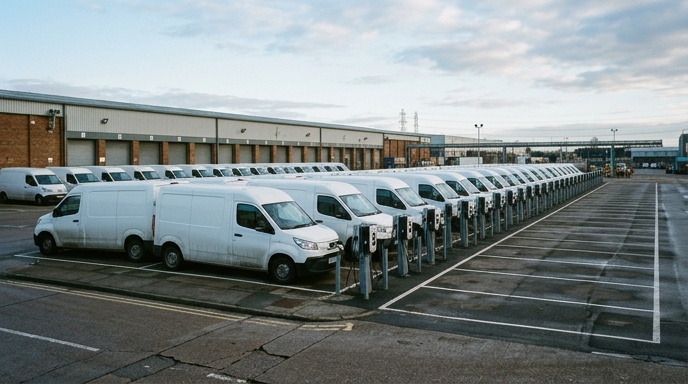
Fleet charging works best with scheduled overnight AC charging plus DC backup for quick turnarounds. Depot planning centres on load management so dozens of vehicles can charge without tripping your supply. This matters for logistics and delivery operators working towards the national 30% electric fleet target by 2030.
Apartment and Multi-Unit Charging
Apartment charging needs shared infrastructure with individual metering so each resident pays for their own energy. Property developers and management companies benefit from a managed system that handles billing and support, removing the operational headache from the residents’ association.
Hospitality and Destination Charging
Hospitality charging is a guest amenity that attracts eco-conscious visitors and encourages longer stays. Hotels, pubs, and restaurants typically use AC points that top up cars while guests dine or sleep, with simple pay-as-you-go or complimentary access.
How to Plan a Commercial EV Charging Installation
Planning a commercial EV charging installation follows a clear order, starting with a site assessment and ending with commissioning and ongoing support. Getting the sequence right avoids surprises around grid capacity, cabling, and future expansion. Most well-run projects move through the same stages.
- Site survey, assessing electrical capacity, parking layout, and user demand.
- System design, selecting AC or DC, point numbers, and load management.
- Grid check, confirming whether an ESB Networks upgrade is needed.
- Installation and commissioning, cabling, mounting, and safe sign-off.
- Monitoring and support, software, billing, and maintenance.
Think about future demand at the design stage. Installing ducting and spare capacity now is far cheaper than digging up a car park again in two years. A managed, turnkey approach takes the operational load off your team, which is why many businesses opt for a partner that handles the full lifecycle rather than juggling several contractors.
Should You Combine EV Charging With Solar and Battery?
Combining EV charging with commercial solar and battery storage lowers the cost of every charge and strengthens your energy security. Solar generates cheaper electricity on site, battery storage shifts that power to when vehicles charge, and the combined system reduces reliance on grid prices sitting near €0.23 per kWh for business users.
The practical benefits stack up over time.
- Charging from self-generated solar cuts your energy bill on every plug-in.
- Battery storage lets you charge fleets overnight from stored daytime generation.
- An integrated system supports ESG and carbon reporting goals.
Engineering-led delivery matters here, because pairing generation, storage, and charging needs one design that balances all three. A single partner handling solar, battery, and charging keeps the system coherent and the responsibility clear.
Planning Your Commercial EV Charging Project
Commercial EV charging is now a sound business move for Irish firms, whether you run a fleet, manage apartments, or want to offer charging as a customer amenity. Match the charger type to how long vehicles stay, check the current grants before you commit, and plan capacity for the vehicles you will run in five years, not just today.
For a setup tailored to your site, sector, and budget, schedule a free consultation and site survey and get a plan built around your building.