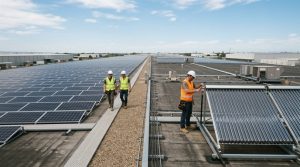
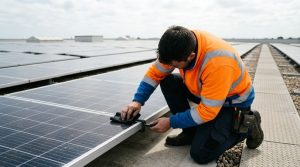
Solar panels can affect your business insurance in Ireland, but for most commercial sites the impact is minor when the system is installed properly and declared to your insurer. In practice, a roof-mounted commercial array becomes part of your building’s fabric, so you need to tell your provider, update your sums insured, and confirm the panels are covered against fire, storm and theft.
The bigger risk is not a higher premium. It’s leaving the panels off your policy entirely, which can void a claim later. Below we walk through what changes, what insurers actually ask, and how the type of panel you fit influences how your underwriter prices the risk.
This matters for warehouses, factories, hospitals and any business weighing up a rooftop system, because the insurance conversation is part of the real cost of going solar, not an afterthought.
Do Solar Panels Increase Business Insurance Premiums in Ireland?
In most cases a well-installed commercial solar system causes little or no premium increase, though your insurer may ask you to raise the building’s sums insured to cover the added value of the array. Panels are treated as a permanent improvement to the property, so the cost sits inside your buildings cover rather than as a separate policy.
Where premiums do move, it’s usually driven by a handful of factors:
- The declared value of the system added to your buildings sum insured.
- The roof type, age and structural condition supporting the array.
- Fire risk, which depends heavily on panel and inverter quality.
- Whether battery storage is fitted alongside the panels.
- The installer’s certification and the quality of the commissioning paperwork.
A SEAI-certified install with full documentation reassures an underwriter far more than a cheap, poorly recorded job. That paperwork trail is often what keeps a premium flat.
What Do You Need to Tell Your Insurer About Solar Panels?
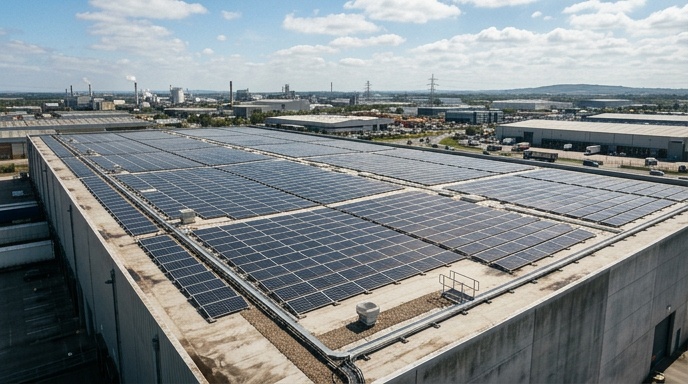
You must notify your insurer before or immediately after installation and provide the system details, because failing to disclose a material change to the building can invalidate future claims. Treat it the same way you would a new extension or a major plant upgrade. A quick call or email with the right documents usually settles it.
Which Documents Will the Insurer Ask For?
Insurers typically want proof the system was installed to standard and is maintained.
Have these ready:
- The installer’s SEAI certification and confirmation of the work.
- The electrical safety certificate and ESB Networks connection sign-off.
- System specification, including panel and inverter make and rated capacity.
- Structural confirmation that the roof can carry the load.
- A maintenance schedule or service contract.
How Does This Change Your Sums Insured?
Adding solar raises the rebuild and reinstatement value of your building, so your buildings sum insured should rise to match. If you don’t adjust it, you risk being underinsured, which can trigger an average clause and cut any payout. Ask your broker to confirm the new figure in writing once the system is commissioned.

How Does Panel Fire Rating Affect Your Insurance?
Panel fire performance directly affects how an underwriter prices your risk, because solar arrays sit on the roof and a fire there is harder to fight. Panels with a stronger fire-performance rating lower the perceived hazard, which helps keep premiums stable, especially on regulated or high-value sites.
This is where panel choice earns its keep. Bifacial glass-on-glass panels carry a superior fire-performance rating compared with standard glass-backsheet panels, because the glass rear sheet resists ignition and flame spread far better than polymer. For warehouses, manufacturing plants, data centres and healthcare buildings, that difference can be the line between an easy renewal and an awkward underwriting conversation.
Commercial fire safety guidance in Ireland sits with the Department of Housing fire safety section, and your insurer will expect any rooftop system to respect those principles. Points an underwriter tends to weigh:
- The panel’s fire classification and backsheet material.
- Inverter quality and the presence of rapid shutdown.
- DC cable routing and isolation points for the fire service.
- Roof access for firefighting around the array.
Our team specifies fire-rated bifacial panels as standard on regulated sites precisely because it protects both the building and the insurability of the system. If you run a plant where fire risk drives your premium, the solar options for manufacturing sites are worth reviewing before you commit.
Does Battery Storage Affect Business Insurance Differently?
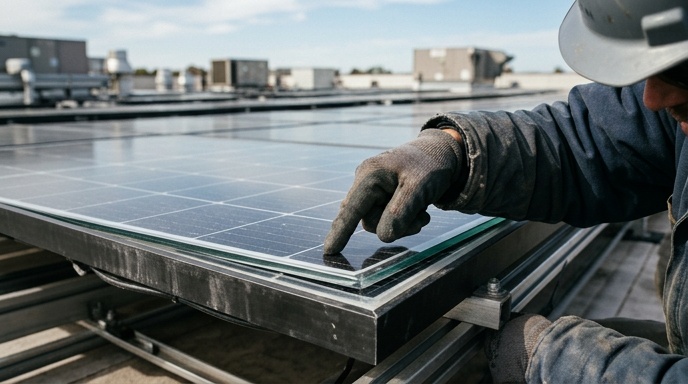
Battery storage adds a separate risk layer that some insurers price more carefully than panels alone, mainly around lithium battery fire risk and where the unit is sited. A well-located, properly ventilated commercial battery with monitoring is usually accepted without fuss, but the siting and specification matter more than with panels.
Insurers generally look for:
- Battery location away from critical escape routes and ideally in a fire-rated enclosure.
- A battery management system with remote monitoring.
- Clear separation from stock, production lines or occupied space.
- Commissioning and maintenance records from a certified installer.
Pairing storage with solar changes your energy profile and can strengthen the business case, but flag the battery to your insurer as its own item. If you’re weighing panels plus storage together, build the insurance question into the design stage rather than bolting it on later.
How to Keep Your Solar System Insurable Over Its Lifetime
Keeping a commercial solar system insurable comes down to proof that it was installed to standard and is maintained year on year. Insurers renew on evidence, so a documented maintenance history is your strongest asset at renewal. Neglect it and you risk cover disputes if something fails.
Practical steps that protect your cover:
- Use a SEAI-certified installer and keep every certificate on file.
- Hold a maintenance contract and log each service and inspection.
- Update your sums insured whenever you extend or upgrade the array.
- Keep monitoring data so faults are caught and recorded early.
- Tell your insurer about any changes, including added battery capacity.
A long maintenance commitment helps here. Our 25-year lifetime maintenance contract gives the kind of continuous service record that underwriters like to see, because it shows the system is checked, cleaned and repaired across its full guarantee period rather than left to drift.
Where grants form part of your plan, the commercial solar grant details sit alongside the insurance picture when you cost the whole project.
Solar, Insurance and the Full Commercial Picture
Solar panels do affect your business insurance in Ireland, but the effect is manageable and often negligible when the system is certified, declared and maintained. The real cost of getting it wrong comes from non-disclosure or underinsurance, not from the panels themselves.
If you’re planning a commercial system and want the install, documentation and grant handling done so your cover stays straightforward, schedule a free site survey with the team to map it out properly.