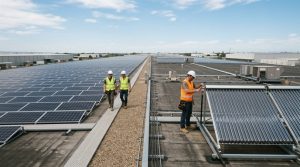
A single commercial-grade solar panel in Ireland typically produces around 350 to 450 kWh per year, depending on its rated output, the roof orientation and how much usable daylight the site gets. For a business roof, that scales up fast. A 100 kWp array can generate roughly 90,000 to 100,000 kWh a year in good Irish conditions.
Ireland gets less direct sun than southern Europe, but far more usable daylight than most people assume. The country averages close to 1,000 kWh of generation per kWp installed each year, which is enough to make commercial rooftop solar a serious financial decision rather than a green gesture.
Below we break down the output per panel, per system size, and the real-world factors that push the numbers up or down on an Irish roof.
How Much Electricity Does One Solar Panel Produce in Ireland?
One modern panel rated between 400W and 500W produces roughly 350 to 450 kWh of electricity per year on a well-oriented Irish roof. That works out at just under 1 kWh per day on average across the year, though summer days deliver several times more than winter ones.
The headline figure depends on the panel’s wattage rating and the site’s annual yield. A rough rule for Ireland is that every 1 kWp of panels generates about 1,000 kWh a year.
- A 400W panel produces around 400 kWh annually in average conditions.
- A 450W panel produces around 450 kWh annually.
- Bifacial glass-on-glass panels add a further yield gain by capturing reflected light from the roof surface behind them.
These are typical ranges, not guarantees. Output shifts with the roof, the season and the weather in any given year.
How Much Electricity Does a Full Solar System Produce by Size?
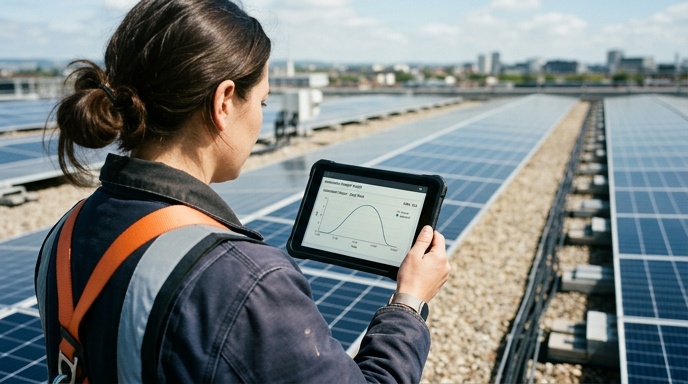
A full commercial system produces electricity in proportion to its kWp rating, at roughly 1,000 kWh per kWp per year in Ireland. So a 50 kWp array generates around 50,000 kWh annually, and a 500 kWp array around 500,000 kWh. The bigger the roof, the larger the saving against your import bill.
The table below shows typical annual output for common commercial system sizes using the Irish yield rule. Actual figures vary by site.
| System Size | Approx. Panels | Typical Annual Output |
|---|---|---|
| 20 kWp | 45 to 50 | ~20,000 kWh |
| 50 kWp | 110 to 125 | ~50,000 kWh |
| 100 kWp | 220 to 250 | ~100,000 kWh |
| 250 kWp | 550 to 625 | ~250,000 kWh |
| 500 kWp | 1,100 to 1,250 | ~500,000 kWh |
With business electricity sitting around €0.23 per kWh, a 100 kWp system offsetting most of its own generation can shave a serious amount off annual running costs. The exact saving depends on how much you use on site versus export, which is where sizing the array to your load matters most. Our solar for warehouses work shows how large roofs turn into real savings at scale.
What Affects Solar Panel Output in Ireland?
Solar panel output in Ireland is driven mainly by roof orientation, tilt, shading and panel quality. A south-facing roof at the right angle can produce noticeably more than an east or west one, and even light shading from a vent or neighbouring building eats into the yearly figure.
How Does Roof Orientation and Tilt Change Output?
South-facing roofs produce the most, with east and west roofs delivering roughly 80% to 90% of that. A tilt of around 30 to 40 degrees suits Irish latitudes best. East-west splits are common on flat commercial roofs and spread generation across the day, which can match a business load better than a single south peak.
How Much Does Weather and Season Affect It?
Irish solar generation is heavily front-loaded to the brighter half of the year. Expect the bulk of annual output between April and September, with winter months producing a fraction of the summer peak.
- Summer can deliver several times the daily output of mid-winter.
- Panels still generate on bright overcast days, which Ireland has plenty of.
- Cooler Irish temperatures actually help, since panels lose efficiency in high heat.
What Role Do Panel Type and Quality Play?
Higher-rated and bifacial panels produce more from the same roof area. Glass-on-glass bifacial panels capture reflected light from both sides, adding yield, and they carry a stronger fire-performance rating that matters for regulated sites like data centres and healthcare. The SEAI guidance for business and public sector covers how commercial generation is assessed.
Does Solar Produce Enough to Power an Irish Business?
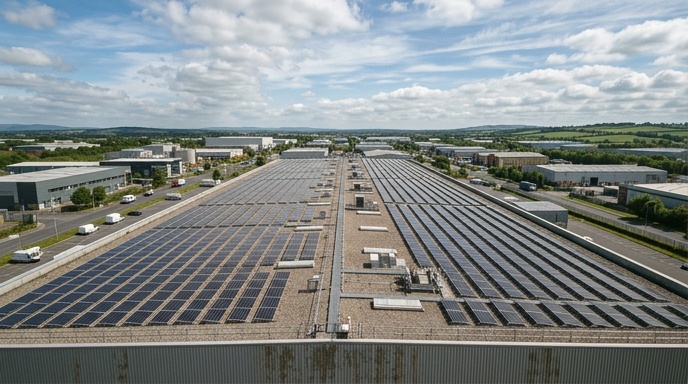
For most Irish businesses, a correctly sized rooftop array can cover a large share of daytime electricity demand, often 30% to 70% of total annual use depending on the roof and the load profile. Operations that run during daylight, such as warehouses, factories and cold storage, get the best match between generation and demand.
The key is matching the system to when you actually use power. Self-consumption is where the value sits, because every unit you generate and use on site is a unit you don’t buy at €0.23.
- High daytime load businesses, like manufacturing and logistics, see the best self-consumption.
- Adding battery storage shifts surplus generation into evenings and early mornings.
- Pairing solar with EV charging soaks up midday output on fleet or guest vehicles.
Ireland reached around 2,345 MW of installed solar by the end of 2025, yet commercial rooftop remains underused. For businesses with large roofs, that’s a straightforward opportunity to cut a rising cost.
How to Estimate Your Own Solar Output
You can estimate your annual output by multiplying your planned system size in kWp by roughly 1,000 kWh. A 60 kWp system, for example, lands near 60,000 kWh a year before adjusting for shading and orientation. For a precise figure, a site survey models your exact roof.
The quick method works like this.
- Work out your available roof area and how many panels fit.
- Multiply the total kWp by about 1,000 to get annual kWh.
- Adjust down for shading, non-south orientation or a shallow tilt.
- Compare the result to your current annual electricity use.
Grant support makes the numbers stronger too. The commercial solar grant under the SEAI NDMG helps offset the upfront cost, which shortens payback on the electricity you generate.

Estimates give you a ballpark. A proper assessment accounts for your roof structure, orientation, shading and load profile, so the system is sized to your actual demand rather than a generic rule.
If you want to know what your own roof could produce and save, book a free site survey with our team and we’ll model the output for your building. Contact our team to get started.